Web 4.0: The Next Frontier of the Intelligent Internet
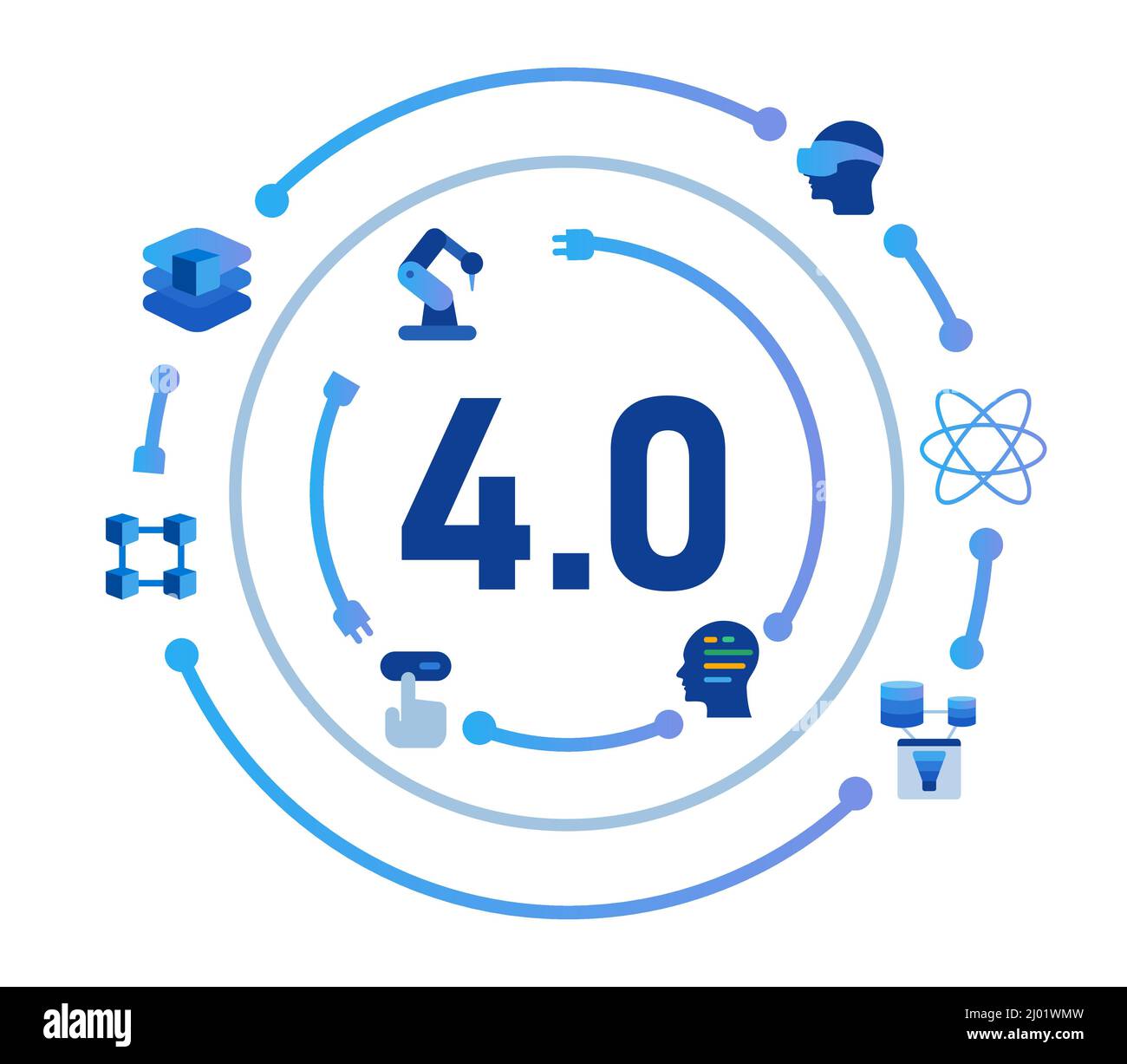
Imagine a web that not only responds to your commands but anticipates your needs — blending the physical and digital worlds in seamless harmony. This is Web 4.0, sometimes called the “Symbiotic Web” or the “Intelligent Web.” It marks a new era where advanced AI, decentralization, IoT, and human-machine interaction converge to redefine how we live, work, and connect online.
In this article, you’ll discover what Web 4.0 truly means, how it evolved from Web 1.0 → Web 2.0 → Web 3.0, its defining characteristics, the technologies powering it, its real-world applications, benefits & challenges, and what the future might hold.
The Evolution: From Static Pages to Symbiosis
To appreciate Web 4.0, let’s briefly trace how the internet evolved:
- Web 1.0 (Read-only web) was mostly static pages — users consumed content but rarely interacted.
- Web 2.0 (Social / Interactive web) enabled user-generated content, social networks, blogs, wikis — people became creators and consumers.
- Web 3.0 (Semantic & Decentralized web) added meaning, data linking, decentralized systems (blockchain), and user control of identity.
Now, Web 4.0 pushes us further — into an intelligent, context-aware, and symbiotic web that understands, predicts, and reacts.
What Is Web 4.0?
Web 4.0 envisions a web where:
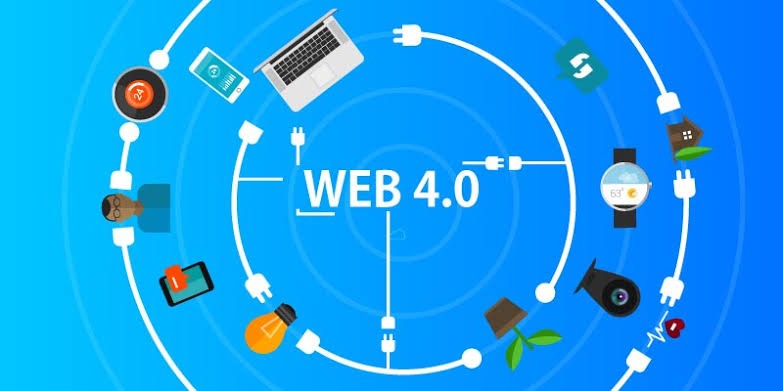
- The physical and digital realms merge — real-world objects and environments interact with web systems in real time.
- Advanced AI and machine learning adapt experiences to individual users, learning preferences, predicting actions, and adjusting dynamically.
- Decentralization gives users more control over their data, reducing reliance on centralized authorities.
- Immersive interactivity — via AR/VR and brain-computer interfaces — makes digital experiences feel tangible.
In essence, Web 4.0 is where the web becomes intelligent, autonomous, and seamlessly integrated into our daily lives.
Key Features Defining Web 4.0
1. Hyper-Personalized Experience through AI
Web 4.0 uses deep learning, NLP, and predictive models to offer content and services tailored to each individual. Imagine your apps adapting before you even request them.
2. Decentralized Architecture & User Sovereignty
Blockchain, peer-to-peer protocols, and zero-trust systems mean users retain more ownership and control of their data, identities, and interactions.
3. Augmented Interactivity
AR, VR, mixed reality, and spatial computing blend the real world with digital layers—so you might navigate a city with live digital overlays or collaborate in virtual rooms that feel real.
4. Context & Intent Awareness
Web 4.0 systems sense context — your location, health metrics, preferences, even emotions — to shape responses intelligently and proactively.
5. Emerging Interfaces: Brain-Computer & Voice
Interfaces evolve beyond keyboard and touch. Brain-computer interfaces (BCIs) and voice become more precise and reliable, enabling more intuitive interactions.
Foundational Technologies Powering Web 4.0
- Artificial Intelligence & Machine Learning: core for prediction, personalization, decision-making.
- Blockchain & Distributed Ledger Tech: securing data, enabling decentralized apps, token economies.
- Internet of Things (IoT): connecting devices, sensors, and the physical world to the digital web.
- Augmented Reality (AR) & Virtual Reality (VR): immersive layers that merge real and virtual spaces.
- Brain-Computer Interfaces (BCI): translating neural signals into commands or communication.
- Edge Computing / 5G / 6G Networks: powering low-latency, real-time processing at the network edge.
Real-World Applications of Web 4.0
Smart Cities & Transportation
Traffic systems that adapt in real time, autonomous vehicles communicating with infrastructure, dynamic route adjustments — powered by IoT + AI.
Healthcare & Remote Monitoring
Continuous health monitoring, AI diagnostics, personalized treatment plans delivered through connected devices — even before symptoms manifest.
Social & Immersive Platforms
Imagine social networks where you physically walk through virtual spaces, interact with others in mixed reality, or use BCI to control digital avatars.
Decentralized Finance & Identity
True financial systems without intermediaries (DeFi), self-sovereign identity systems, verifiable credentials, and secure peer-to-peer exchange.
Smart Homes & Digital Assistants
Homes that anticipate your needs — they adjust lighting, temperature, and media automatically, learning your patterns and optimizing energy use.
Benefits: What Web 4.0 Brings You
- Tailored User Experiences: content and interfaces become deeply personal.
- Greater Privacy & Control: decentralization reduces data harvesting by big platforms.
- New Monetization Models: microtransactions, token economies, reputation systems.
- Accessibility: BCIs and immersive tech can empower differently-abled users.
- Efficiency & Automation: tasks handled autonomously, letting humans focus on creativity and strategy.
Challenges & Risks You Should Know
- Surveillance & Data Abuse: more data means more risk of misuse or manipulation.
- Cybersecurity Threats: AI-driven attacks and vulnerabilities may increase.
- Digital Inequality: access to advanced infrastructure might widen the gap between rich and poor.
- Ethical & Governance Issues: who sets rules for autonomous systems and AI?
- Dependence on Technology: reliance on intelligent systems might affect human autonomy.
The Road Ahead: What to Expect
As Web 4.0 unfolds, we’ll see hybrid digital-physical ecosystems taking root. Developers and creators will build new paradigms of interaction. Governance models will evolve — with communities voting on rules in decentralized systems. Even now, industrial, healthcare, and urban sectors are piloting Web 4.0 ideas.
Over the next decade, Web 4.0 is likely to redefine our relationship with the web — not just as users, but as active co-creators in a living, intelligent network.
Final Thoughts
Web 4.0 isn’t just the next web version — it’s a fundamental shift. The web stops being a tool and becomes a partner — learning, predicting, and evolving with us. It brings immense potential, but also responsibility. As we step toward that future, balancing innovation with ethics, privacy, and fairness is what will define how beneficial Web 4.0 truly becomes.
By deeply understanding Web 4.0 now, creators, developers, and communities can shape it — not be shaped by it.


